
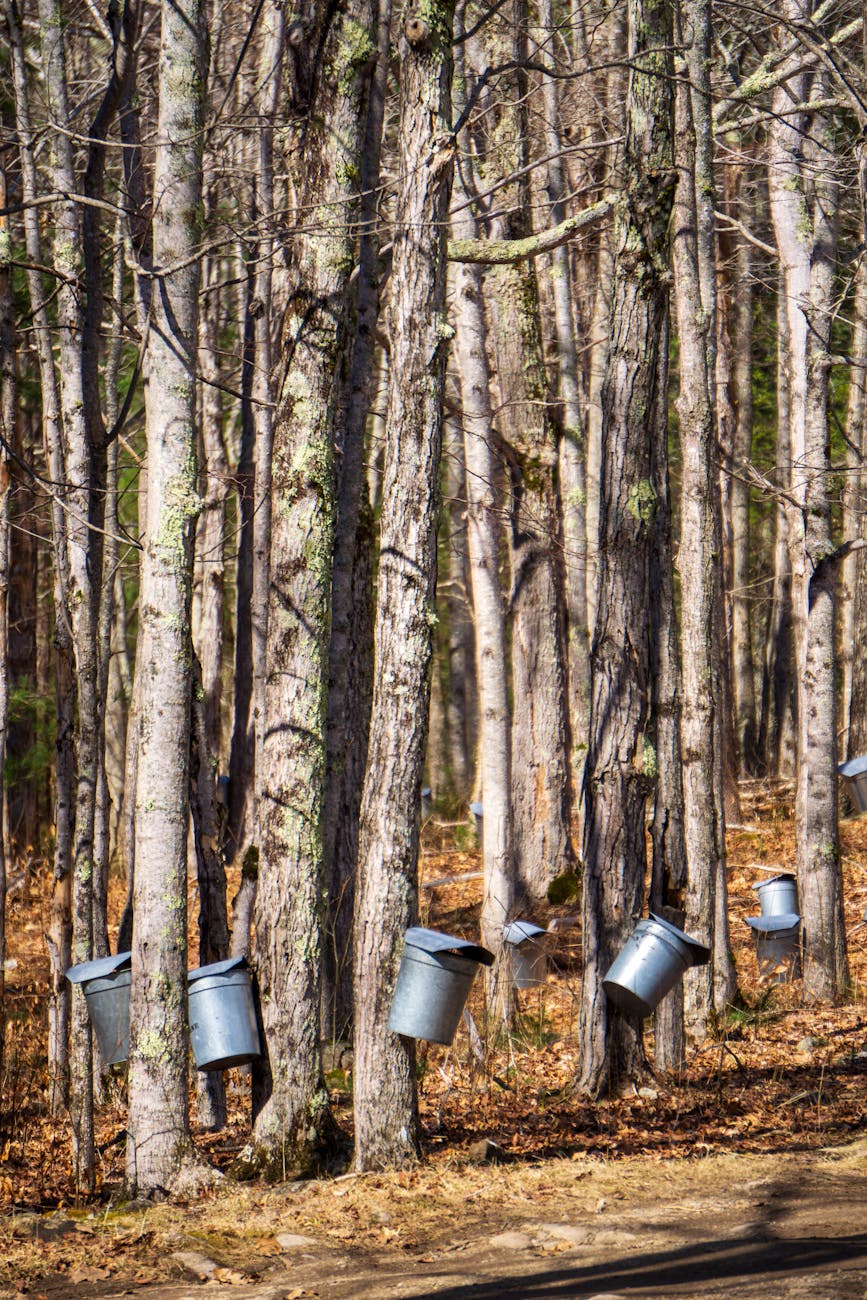
In Michigan, maple tapping season quietly sneaks in between winter and spring.
The days get slightly warmer. The nights still freeze. And suddenly, trees start running sap.
For families looking for a frugal, hands-on, memory-making activity, maple tapping is one of the most rewarding traditions you can start — and it doesn’t require a farm or fancy equipment.
You can do this in your backyard.
You can do this with your kids.
And you can do it without spending a fortune.
Here’s everything you need to know to start maple tapping on a budget this season.
When Does Maple Tapping Season Start?
In Michigan and other northern states, maple tapping season typically begins:
Late February through March
When daytime temps reach 40–45°F
And nighttime temps drop below freezing
That freeze-thaw cycle is what gets sap flowing.
If you wait too long and buds form on the trees, the sap turns bitter — so timing matters.
Do You Need a Sugar Maple?
Sugar maples produce the sweetest sap, but they’re not your only option.
You can tap:
- Sugar maple
- Red maple
- Silver maple
The difference? Sugar maples have higher sugar content, so you’ll boil less to get syrup.
If you’re unsure what tree you have:
Look at the leaf shape (in fall photos) or bark pattern.
No maple tree in your yard?
Check with neighbors or family who may have one.
How Much Does It Cost to Start?
You do not need a commercial setup.
Beginner budget breakdown:
- Tapping kit (spiles + tubing): $25–$40
- Drill bit (if you don’t already have one): $10
- Bucket or food-safe container: $5–$15
- Large stock pot for boiling: already owned or $30
You can start for under $75 — often less if you already own tools.
Compared to many seasonal activities, this is incredibly affordable.
How to Tap a Maple Tree
Step 1: Choose a Healthy Tree
- At least 10–12 inches in diameter
- No visible disease or major damage
- Sunny exposure helps sap flow
Larger trees can support more taps (1 tap per 10–12 inches of diameter).
Step 2: Drill the Hole
- Drill about 2 inches deep
- Slight upward angle
- On the south or southeast side of the tree
Clear out wood shavings.
Step 3: Insert the Spile
Gently tap it in with a rubber mallet or hammer until snug — not forced.
Step 4: Attach Bucket or Tubing
Hang your bucket or connect tubing to a container.
Within hours (sometimes minutes), you may see sap dripping.
Kids LOVE this part.
How Much Sap Do You Need?
This surprises most people:
It takes about 40 gallons of sap to make 1 gallon of syrup.
That means:
- Sap looks like water.
- It has a faint sweetness.
- Boiling is the magic step.
Don’t be discouraged by the volume — small batches are still worth it.
Boiling the Sap (The Fun Part)
Boiling indoors creates massive steam, so most families boil outside.
Options:
- Propane burner
- Grill side burner
- Open fire pit
Steps:
- Strain sap through cheesecloth.
- Pour into large pot.
- Boil for hours, adding more sap as it reduces.
- When it darkens and thickens, monitor closely.
Syrup is done at:
About 7°F above the boiling point of water (around 219°F).
At the end, you’ll filter again and pour into sterilized jars.
The smell alone makes the effort worth it.
Frugal Benefits of Maple Tapping
This isn’t just about syrup.
It’s about:
- Teaching kids where food comes from
- Outdoor winter activity
- Science lesson at home
- Seasonal living
- Reducing grocery costs long-term
Pure maple syrup at the store is expensive.
Making your own? Deeply satisfying.
Make It a Family Tradition
Ideas to make it special:
- Let kids check the bucket daily.
- Keep a “sap journal” tracking temperatures.
- Make pancakes on boiling day.
- Label jars with the year.
Over time, it becomes something your family anticipates.
Seasonal rhythms create grounding memories.
What If You Don’t Want to Tap Yourself?
You can still enjoy maple season frugally by:
- Visiting a local sugar bush
- Attending maple festivals
- Buying directly from small producers
- Supporting Michigan farms
It’s often cheaper than grocery store pricing and supports local agriculture.
Is Maple Tapping Worth It?
If you’re looking for:
- A screen-free family activity
- A hands-on science lesson
- A frugal seasonal hobby
- A reason to get outside in late winter
Yes.
It’s not instant gratification. It’s slow, patient, weather-dependent work.
But so is most meaningful family tradition.
Final Thoughts
Maple tapping isn’t just about syrup.
It’s about noticing the shift from winter to spring.
It’s about teaching patience.
Watching the drip.
Waiting for transformation.
And in a world of fast everything, there’s something beautiful about that.
If you’ve been looking for a simple, affordable, Michigan-friendly family activity — this might be the year you try it.
Sugaring season doesn’t last long.
But the memories do.



Leave a Reply